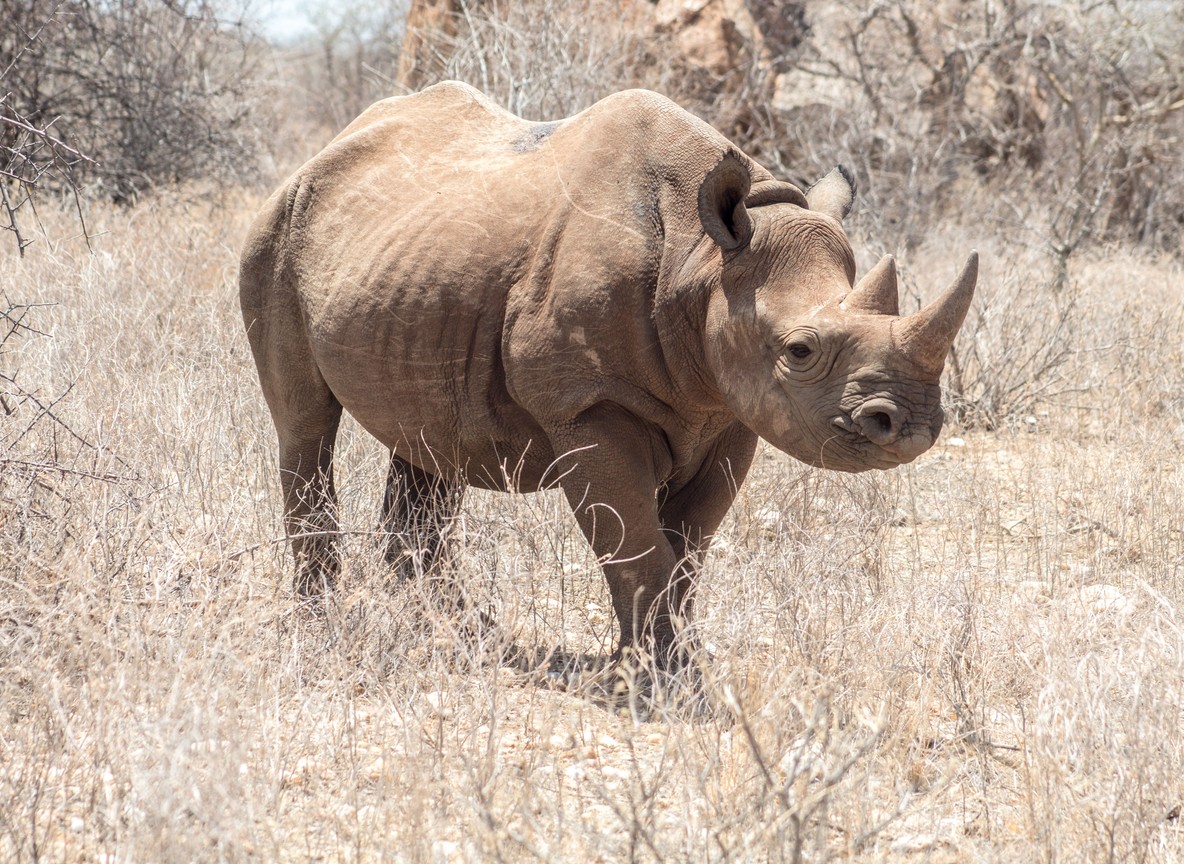
Kenya Wildlife Service is running against a deadline this year. Its national black rhino strategy, now in its seventh edition, set a target of 1,200 black rhinos by the end of 2026. The country’s population passed 1,000 earlier this year, so the gap is real but closing. Touring Insights looks at what the kenya black rhino recovery plan 2026 target actually requires, which sanctuaries are doing the work, and how the plan is starting to reshape where travelers can go to see rhinos in the wild.
This is not a story about one park or one number. It is a plan built around dozens of small, guarded populations, each managed toward a shared national goal.
What Is Kenya’s Black Rhino Recovery Plan?
Kenya has published a national black rhino strategy roughly every five years since the early 1990s, when the population had collapsed to fewer than 400 animals. The current version, the seventh edition, covers 2022 through 2026 and sets two connected goals: hit 1,200 black rhinos nationally by the end of this year, and reach 2,000 by 2037.
This is not a single conservation project. It is a coordination document. Kenya Wildlife Service uses it to set growth targets for each individual sanctuary, decide when rhinos need to move between sites, and direct funding toward new or expanding protected zones. Every sanctuary manager reports back into the same national count.
The 2026 Target, and Why 5 Percent Growth Matters
A minimum 5 percent annual growth rate has been the backbone of Kenya’s rhino strategy for years. Rhinos breed slowly, so hitting that number consistently is harder than it sounds. Gestation runs 15 to 16 months, and a female typically produces one calf every 2.5 to 4 years.
Consistent 5 percent growth is what carried Kenya from under 400 rhinos in the 1980s past 1,000 in 2026. The same rate, held steady, is the only realistic path to 1,200 by December and 2,000 by 2037. Missing the growth target in even a few sanctuaries in a single year pushes the whole national number off track.
Keeping Sanctuaries Below Capacity
Rhino sanctuaries cannot simply keep filling up. Each fenced site has an ecological carrying capacity, the number of rhinos its habitat can support long term. Conservation practice across Africa, and Kenya’s plan specifically, aims to hold each sanctuary below that ceiling, often around three-quarters of full capacity.
Crowded sanctuaries slow breeding and raise the risk of territorial injury between males. Keeping density lower keeps growth rates higher. When a sanctuary nears its limit, KWS and partner conservancies translocate rhinos to another site with room to grow, which is also how genetic diversity gets spread across founder populations descended from the 1980s survivors.
New Ground: Ngulia’s Expansion Inside Tsavo West
The clearest sign of the plan in action sits inside Tsavo West National Park. In December 2025, Kenya Wildlife Service merged the long-running Ngulia Rhino Sanctuary with the neighboring Tsavo West Intensive Protection Zone. The combined, fully guarded area now covers roughly 3,200 km2, a dramatic jump from Ngulia’s original fenced footprint and reportedly the largest intact black rhino sanctuary in the world.
That kind of expansion is exactly what the recovery plan needs. More secured habitat means sanctuaries can hold more rhinos without crowding, which supports the growth rate the plan depends on. It also opens new ground for future rhino-focused game drives inside Tsavo West, a park most travelers still associate with elephants and lions rather than rhino tracking.
Community Ownership: Sera and the Plan’s Newest Model
Not every sanctuary in the plan is government or private land. Sera Community Conservancy in Samburu County holds around 23 black rhinos and is East Africa’s only black rhino sanctuary owned and managed by a local community rather than KWS or a private trust. It operates under the Northern Rangelands Trust, with Saruni Rhino camp offering guided rhino tracking on foot, a rare format most fenced sanctuaries do not allow.
Sera matters to the 2026 targets for a reason beyond its rhino count. It proves the model can work outside the traditional fenced-conservancy structure, which the plan increasingly leans on as it looks for more places to put a growing population.
Kenya’s Black Rhino Recovery Plan by the Numbers
| Metric | Figure |
|---|---|
| National black rhino population (2026 reporting) | 1,000+ |
| End-of-2026 target (7th edition plan) | 1,200 |
| Long-term target | 2,000 by 2037 |
| Minimum annual growth rate benchmark | 5% |
| Ngulia/Tsavo West combined protected zone (post-Dec 2025 merger) | approx. 3,200 km2 |
| Sera Community Conservancy black rhino population | approx. 23 |
| Sanctuaries and intensive protection zones nationwide | 10+ |
Population figures and sanctuary counts change as translocations and census updates land through the year; confirm current numbers with Kenya Wildlife Service before citing them elsewhere.
What the Plan Means for Your Safari
A recovery plan built on moving rhinos between sites and expanding protected ground has a direct effect on where safari itineraries can go. Tsavo West’s newly merged 3,200 km2 zone means operators can start building rhino-focused circuits into a park that historically was not a top rhino destination. Sera’s community model gives travelers a walking, tracking-based rhino experience that fenced sanctuaries like Ol Pejeta or Lake Nakuru cannot offer.
None of this changes access to the established sanctuaries. Ol Pejeta Conservancy, roughly 200 km and a 3 to 3.5 hour drive north of Nairobi, still holds East Africa’s largest single black rhino population. Lake Nakuru National Park, about 160 km and 2.5 hours from Nairobi, remains the most convenient fenced sanctuary for a day-trip-style rhino sighting. What is changing is the range of options behind those two familiar names.
| Destination | Approx. size | Distance/time from Nairobi | Rhino experience type |
|---|---|---|---|
| Ol Pejeta Conservancy | 364 km2 | 200 km, 3-3.5 hrs road or 45 min flight to Nanyuki | Guided monitoring drives, largest single population |
| Lake Nakuru National Park | 188 km2 | 160 km, approx. 2.5 hrs road | Standard game drives through fenced sanctuary |
| Ngulia/Tsavo West merged zone | approx. 3,200 km2 | 240-330 km, 4-5 hrs road via Mtito Andei or Voi | Expanding drive circuits, newer to rhino tourism |
| Sera Community Conservancy | not fenced; open community land | Reached via light aircraft charter from Nairobi plus road transfer, given its remoteness | Foot-based rhino tracking with community rangers |
Explorer Notes
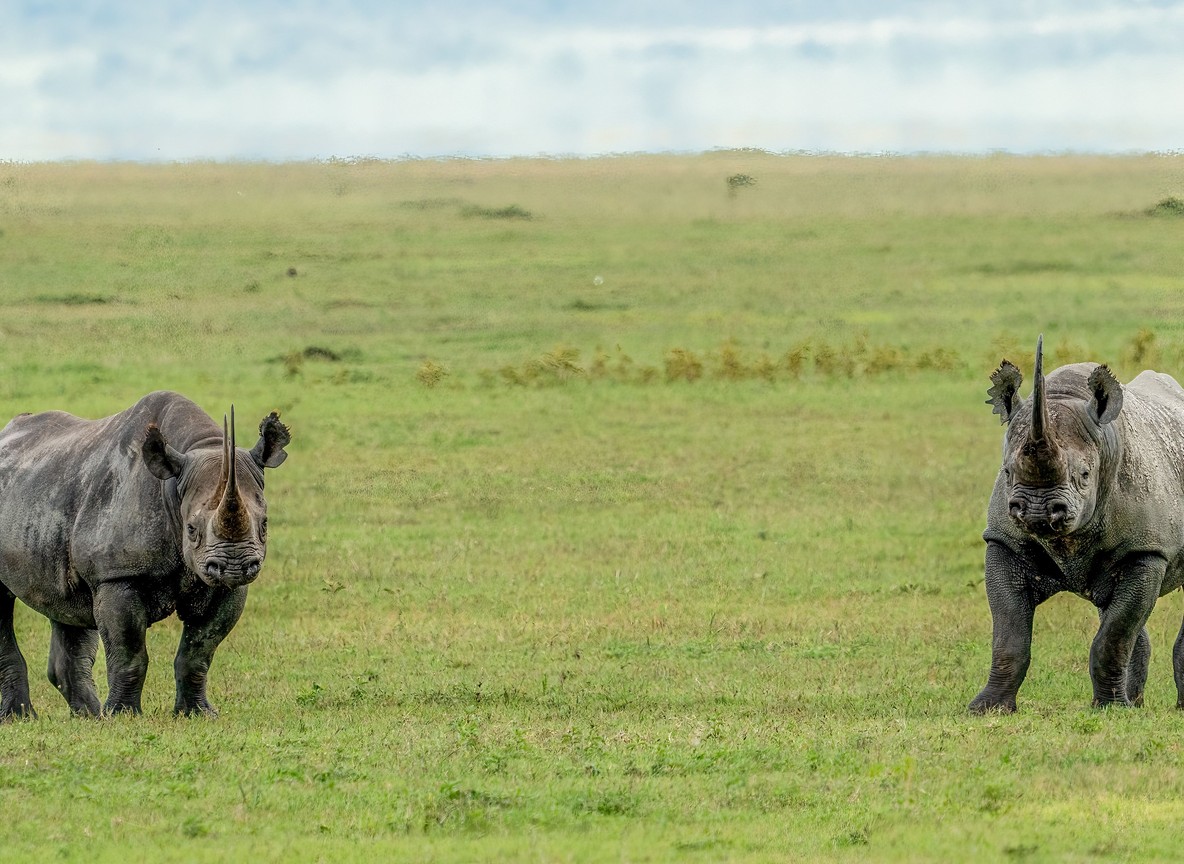
Ask your operator directly whether a camp sits inside a plan-linked sanctuary or an adjacent conservancy, since the distinction affects what activities are allowed. Fenced sanctuaries like Ol Pejeta restrict guests to vehicles, while Sera’s community model permits walking safaris with armed rangers, a genuinely different pace of encounter.
Guides at Tsavo West are still adjusting to the Ngulia merger, so ask specifically about which sections of the expanded zone are open for game drives this season. Not all of the newly combined 3,200 km2 has visitor infrastructure yet.
Rhino translocations happen periodically as sanctuaries near capacity, usually announced by KWS rather than publicized in advance. If a specific named rhino you read about is not where expected on a return visit, a translocation under the recovery plan is the likely reason, not a sighting failure by your guide.
Pack for early starts. Rhino activity peaks in the cool hours after dawn and before dusk across every sanctuary in the plan, fenced or community-run alike.
Frequently Asked Questions
What is Kenya’s Black Rhino Recovery Plan? It is Kenya Wildlife Service’s national strategy for growing the black rhino population, now in its seventh edition, covering 2022 through 2026, with sanctuary-level growth targets feeding into one national count.
What is the 2026 target for Kenya’s black rhino population? The plan targets 1,200 black rhinos nationally by the end of 2026, up from a population that passed 1,000 earlier this year.
What is the long-term target beyond 2026? Kenya’s plan aims for 2,000 black rhinos by 2037, roughly double the current population.
What changed at Ngulia Rhino Sanctuary in Tsavo West? A December 2025 merger combined Ngulia Rhino Sanctuary with the Tsavo West Intensive Protection Zone, creating a roughly 3,200 km2 guarded area, reportedly the largest intact black rhino sanctuary in the world.
Can travelers do a walking safari to see black rhinos? Yes, at Sera Community Conservancy in Samburu County, where community rangers guide foot-based rhino tracking, a format most fenced government or private sanctuaries do not allow.
A recovery plan this active means the map of where you can responsibly see a black rhino keeps shifting. Visit our Tour Packages page for a Kenya itinerary that reaches Ol Pejeta, Tsavo West, or Sera, or ask a partner operator which rhino sanctuaries best fit your dates this year.
What to Read Next
- Curious how Kenya’s rhinos got here? Read Kenya Black Rhino Population 2026.
- Planning a rhino-focused stop near Nairobi? See our Ol Pejeta Conservancy guide.
- Want the full sanctuary rundown? Check Kenya’s Rhino Sanctuaries.